
Hwange National Park Full Day Trip from Victoria Falls
View video
13 photos
Duration
13H
Min People
2
Min Age
6+
Pickup
Included
Zimbabwe’s Wild Heart
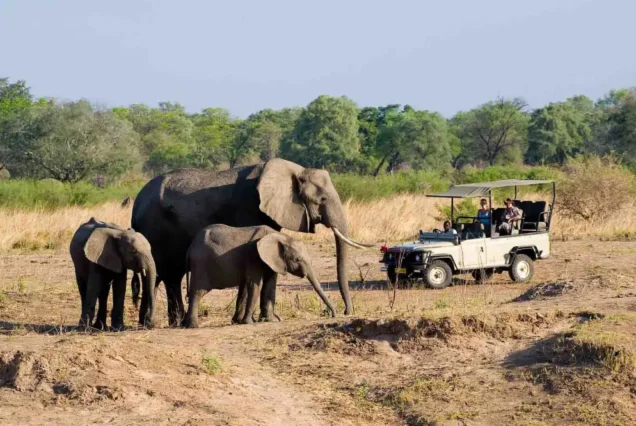
Hwange National Park covers 14,651 square kilometres of northwestern Zimbabwe – a vast, ancient wilderness of teak and mopane woodland, open grassland, and the famous artificial waterholes that draw wildlife from across the region. It is home to over 45,000 elephants, making it one of the most densely populated elephant habitats on the continent, and supports all of the Big Five along with wild dog, cheetah, and over 400 bird species.
It is, by any measure, one of Africa’s great safari destinations. And it is close enough to Victoria Falls to visit in a single day.
The Journey There
Your departure is early – a hotel pickup in Victoria Falls that puts you on the road before most guests are at breakfast. The drive to Hwange takes approximately two and a half hours, passing through open Zimbabwe bushveld on the old road to Bulawayo. Your guide uses this time to orient you to what you might expect – the park’s ecology, its wildlife patterns, and the specific areas you will be visiting based on current conditions and recent sightings.
Arrival at the park entrance marks the beginning of the game drive. From here, the day belongs entirely to the wilderness.
Inside the Park
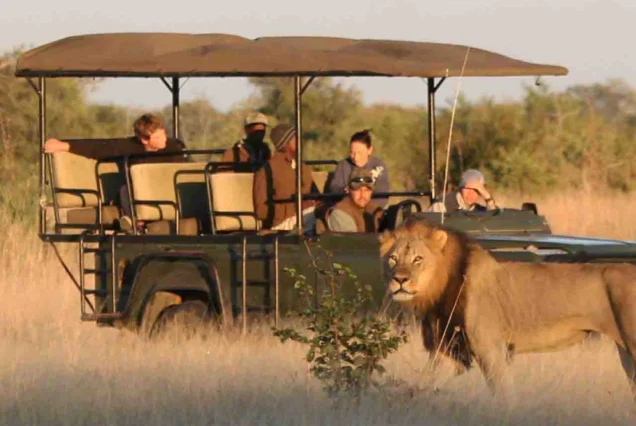
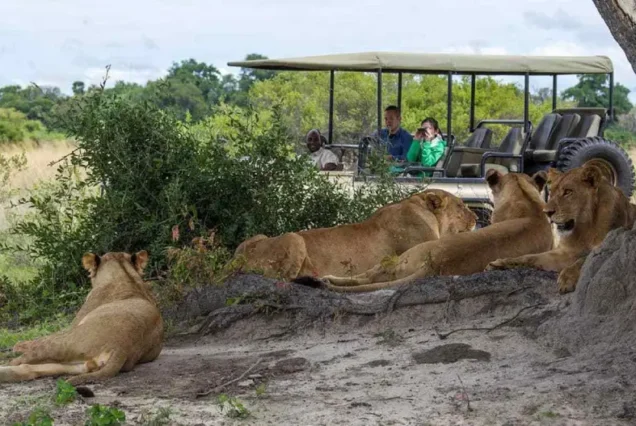
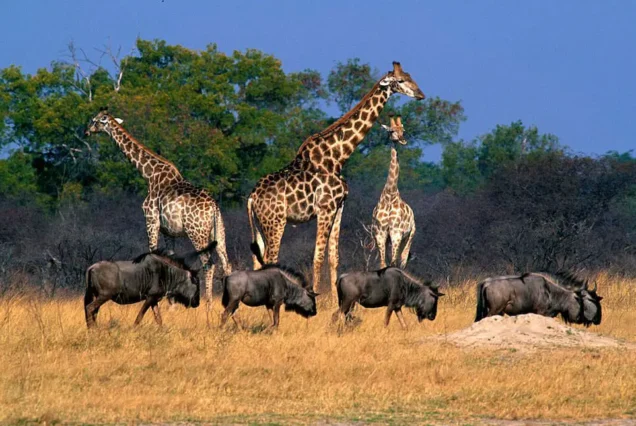
Hwange’s character shifts throughout the day. In the early morning, predators are still active – lion and leopard are most commonly encountered in the first two hours of daylight. As the morning progresses, the landscape fills with movement: elephant herds moving between waterholes, buffalo in great slow-moving aggregations, giraffe towering above the mopane canopy, and the constant activity of smaller species that most game drives overlook.
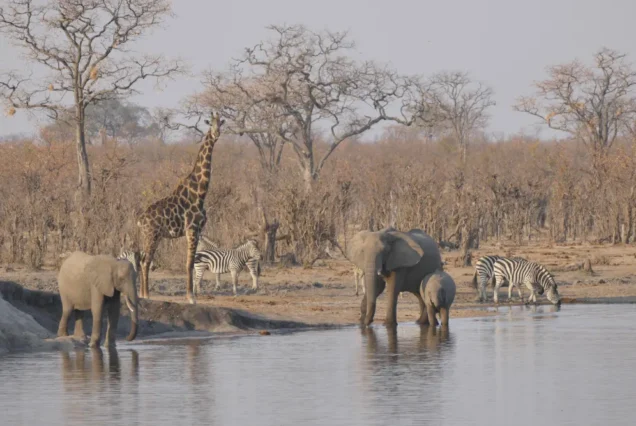
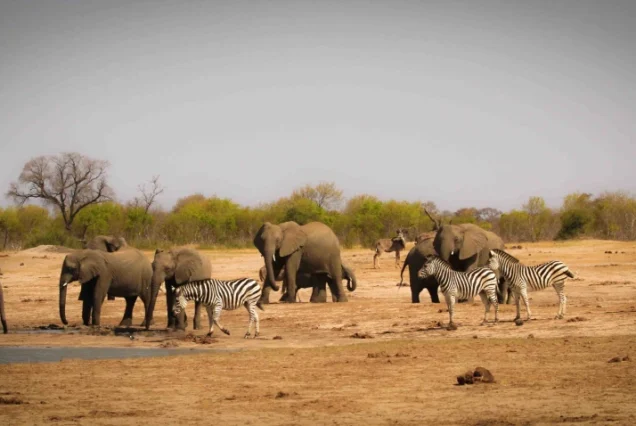
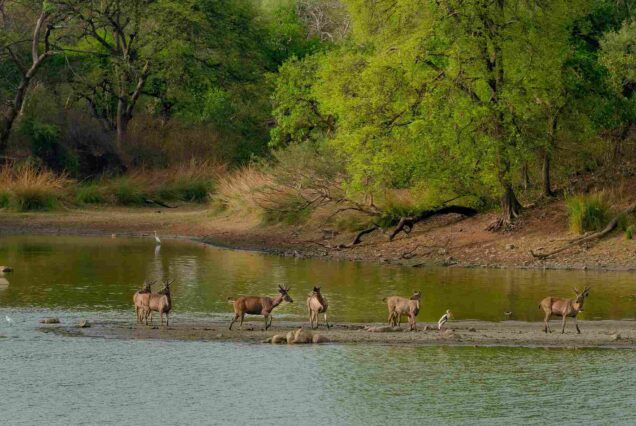
The waterholes are the engine of Hwange’s wildlife density. Particularly during the dry season – May to October – they function as natural gathering points where species that rarely interact in the wild find themselves side by side. Watching a breeding herd of fifty elephants, a tower of giraffe, and a pride of lions all occupy the same waterhole at different distances is a scene that never becomes ordinary.
Your guide covers multiple distinct habitat zones across the full day – giving you the breadth of Hwange rather than a single circuit driven repeatedly. A picnic lunch is taken in the field, inside the park, at a scenic location chosen by your guide on the day.
What You May Encounter
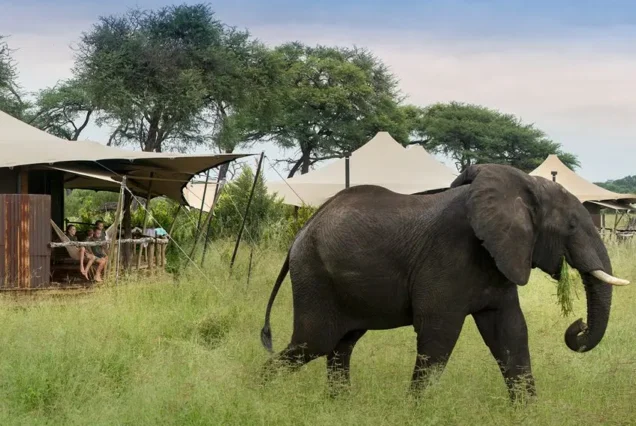
- African Elephant – the defining species of Hwange. Herds of 50 to 200+ at waterholes during the dry season
- Lion – one of Hwange’s most reliably sighted predators. Multiple prides with known territories
- Leopard – present throughout; tree-resting individuals are regularly spotted by attentive guides
- Buffalo – massive herds in the dry season, often numbering in the hundreds
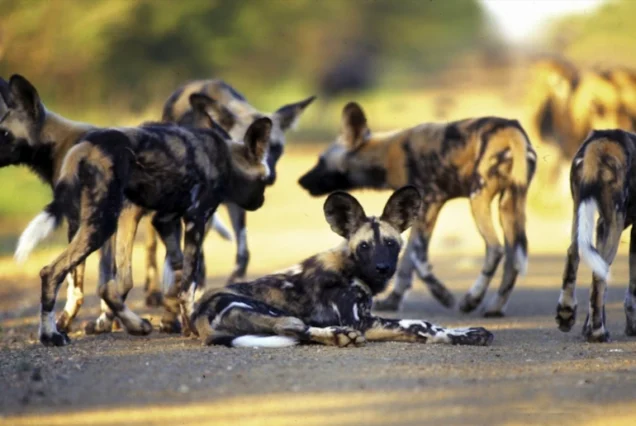
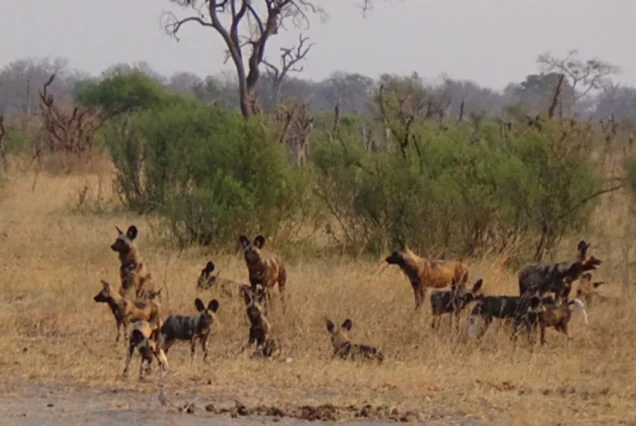
- Wild Dog – Hwange has one of southern Africa’s healthiest wild dog populations
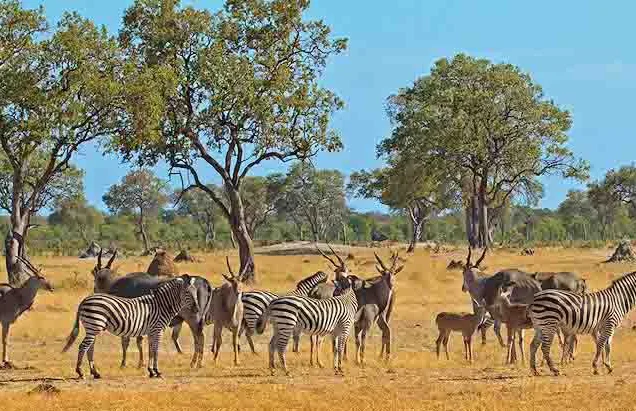
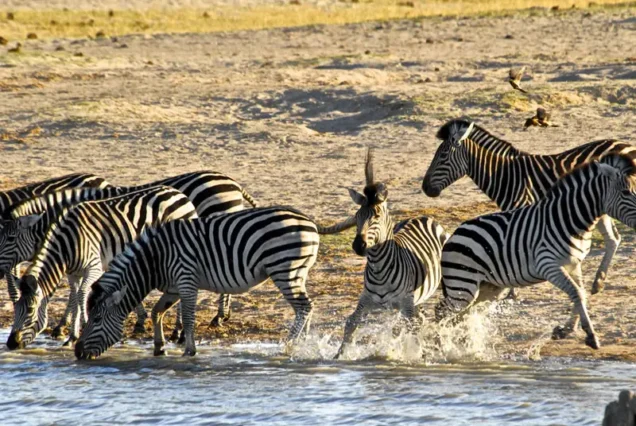
- Giraffe, Zebra, Kudu, Sable, Roan – abundant in the woodland and grassland zones
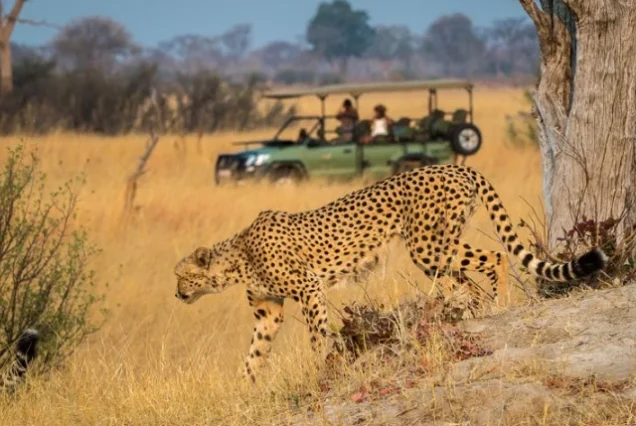
- Cheetah – present in the open grasslands; a genuinely special sighting
- 400+ bird species – Hwange is a destination in itself for serious birdwatchers
Best Time to Visit Hwange
The dry season from May through October offers the most dramatic wildlife viewing, as animals concentrate around the permanent waterholes. September and October see the highest densities, with temperatures climbing but wildlife spectacles that are genuinely extraordinary.
The green season from November to April transforms Hwange into lush, rain-fed beauty. Newborn animals appear throughout, birdwatching peaks, and the landscape achieves a photographic quality that the dry season cannot match. Wildlife is more dispersed but no less present.
What’s Included
- Return hotel transfers from Victoria Falls
- Full-day game drive in Hwange National Park in an open 4×4 safari vehicle
- Professional licensed guide throughout
- Picnic lunch in the field
- Bottled water and refreshments during the drive
- Hwange National Park entry fees
Good to Know
- Duration: approximately 13 hours including transfers
- Departure is early – typically 05:30 to 06:00 from Victoria Falls hotels
- Wear comfortable, layered clothing in neutral colours
- Bring sunscreen, a hat, binoculars, and a camera with sufficient memory and battery
- A light fleece or jacket is essential for the early morning drive, particularly May through August
- This is a long day on rough terrain – guests with back or mobility concerns should contact us before booking
Included/Excluded
- Expert Guides
- Pickup Included
- Things of a personal nature
- National Park fees ($20)
- Children (5 years to 12 years) $105/person
Tour Map
From
$250.00
Booking Form
Enquiry Form
You May Like
$79.00
Explore
Leave a Reply